XIAM007

Making Unique Observations in a Very Cluttered World

Saturday, 23 October 2010

Facebook 'accidentally outing gay users' to outside firms through targeted ads -

Facebook 'accidentally outing gay users' to outside firms through targeted ads - 


Facebook might be inadvertently outing its gay users to advertisers, according to a new study.
Researchers have discovered that different targeted advertising is being sent to users’ accounts if they have described themselves as gay or straight. 
The discovery could mean that people who wish to keep their sexuality private may be sharing it with advertisers without their knowledge.
The loophole is yet another example of a Facebook privacy breach after it emerged that millions of pieces of personal information were being shared without users’ consent after using popular apps.

A team from Microsoft and Germany's Max Planck Institute created six fake profiles: two straight men, two straight women, a gay man and a lesbian. They wanted to see if Facebook targeted ads based on sexuality, and so the profiles were left otherwise completely the same.
The team then monitored what ads each virtual user was sent over a period of a week.
They found that the ads displayed on the gay man's profile differed substantially from those on the straight one. Many of these adverts were not obviously adverts for services that only gay men would require, and half of them did not mention the word ‘gay’ in the text.
The researchers say that this means people who click on the adverts from their Facebook profile will not know that they were targeted for that ad because of the sexual orientation and so by clicking through on the ad are effectively ‘outing’ themselves.
This means that the advertising firms now know if they are gay even if this aspect of their profile has been hidden from public view.
The researchers write in the paper: ‘The danger with such ads, unlike the gay bar ad where the target demographic is blatantly obvious, is that the user reading the ad text would have no idea that by clicking it he would reveal to the advertiser both his sexual-preference and a unique identifier (cookie, IP address, or email address if he signs up on the advertiser's site).’
The loophole means that any advertisers who collect data such as Facebook IDs could match a person’s sexual preference with their unique ID and their name.
A Facebook spokesman said: 'Our advertising guidelines prohibit advertisers from using user data collected from running an ad on Facebook, including information derived from targeting criteria.  
'For example, we explicitly prohibit them from associating that targeting detail with the data collected from the user in forms they fill out, applications they make, or other interactions on their site. We also require that targeting of ads based on a user attribute be directly relevant to the offer in the advertisement.  
'We take the privacy of our users very seriously and take immediate action when violations of these policies come to our attention.  We don’t provide any personally identifiable information to advertisers and we recommend that people always exercise caution when filling out forms about themselves online. 
'We have no evidence that the advertisers mentioned in this study sought to collect information about people using Facebook, but we encourage people to report any advertisements that they suspect may be doing so.'
Last week it emerged that vast amounts of data – including the names of individual members and their online ‘friends’ – were passed to internet advertising firms, with tens of millions of people thought to have been affected.
The leaks were possible even when members had deliberately set their privacy options to the maximum secrecy levels.
The practice violates Facebook’s own rules on data protection and will raise questions about the company’s ability to keep information about its members’ activities secure.
Security experts warned that the details could be used – when combined with other publicly available information – to build up a detailed picture of an individual’s interests, friendship circle and lifestyle.
Around 25 different advertising and data firms were receiving the information, an  investigation by the Wall Street Journal found.
It was passed to them by firms whose ‘apps’ – games and other features – operate on Facebook and not by the social networking site itself.
Using the data allows advertisers to better target individuals with promotion for specific product.


Read more: 
http://www.dailymail.co.uk/sciencetech/article-1322916/Facebook-accidentally-outing-gay-users-advertisers.html#ixzz13CPkIHDe

Friday, 22 October 2010

World’s most advanced nuclear submarine, HMS Astute, runs aground on rocks off Scotland -

World’s most advanced nuclear submarine, HMS Astute, runs aground on rocks off Scotland - 


The world’s most advanced nuclear submarine, HMS Astute, has run aground on rocks off Scotland causing considerable embarrassment for Navy chiefs.

The grounding of the £1.2 billion Astute hunter-killer comes at the end of a dire week for the Royal Navy which has seen its carrier force halved, Harrier jump jets axed and warship force reduced by almost a quarter.
It is understood that the boat, which is first in its class, ran aground by its stern in a manoeuvre that “went slightly wrong” after it had dropped some sailors ashore in tidal waters off the Isle of Skye.
As the tide rapidly ebbed it is thought the skipper of Astute, Commander Andy Coles, decided not to power it off the obstruction as it would risk damaging the hull that carries some of the most advanced acoustic tiles that make Astute virtually undetectable beneath the seas.

Biggest Leak in US History - 109,032 deaths in Iraq, 66,081 'civilians'; 23,984 'enemy' - 31 civilians dying every day -

Biggest Leak in US History - 109,032 deaths in Iraq, 66,081 'civilians'; 23,984 'enemy' - 31 civilians dying every day - 


At 5pm EST Friday 22nd October 2010 WikiLeaks released the largest classified military leak in history. The 391,832 reports ('The Iraq War Logs'), document the war and occupation in Iraq, from 1st January 2004 to 31st December 2009 (except for the months of May 2004 and March 2009) as told by soldiers in the United States Army. Each is a 'SIGACT' or Significant Action in the war. They detail events as seen and heard by the US military troops on the ground in Iraq and are the first real glimpse into the secret history of the war that the United States government has been privy to throughout.
The reports detail 109,032 deaths in Iraq, comprised of 66,081 'civilians'; 23,984 'enemy' (those labeled as insurgents); 15,196 'host nation' (Iraqi government forces) and 3,771 'friendly' (coalition forces). The majority of the deaths (66,000, over 60%) of these are civilian deaths.That is 31 civilians dying every day during the six year period. For comparison, the 'Afghan War Diaries', previously released by WikiLeaks, covering the same period, detail the deaths of some 20,000 people. Iraq during the same period, was five times as lethal with equivallent population size.
Please donate to WikiLeaks to defend this information.

London School of Economics: US Must Prepare for "Savage Austerity" -

London School of Economics: US Must Prepare for "Savage Austerity" - 


Howard Davies, chairman of the London School of Economics, and Willem Buiter, chief economist at Citigroup Inc., talk about the potential impact of additional quantitative easing by the Federal Reserve on the U.S. economy. Davies and Buiter say "Savage Austerity" coming to America as they talk with Tom Keene on Bloomberg Television's "Surveillance Midday." (Source: Bloomberg)

WikiLeaks’ 400,000 Iraq War Docs Reveal Torture & Collateral Murder unit killed insurgents who were trying to surrender -

WikiLeaks’ 400,000 Iraq War Docs Reveal Torture & Collateral Murder unit killed insurgents who were trying to surrender - 


The secret-spilling website WikiLeaks released almost 400,000 U.S. Army reports from the Iraq War on Friday, marking the largest military leak in U.S. history.
The database covers events from the Iraq War dating from 2004 through 2009, with the vast majority of entries classified at the “secret” level. WikiLeaks’ War Logs pageincludes a sophisticated search engine that makes it easy to browse and search through the documents. Unlike its Afghan release last July, WikiLeaks does not appear to have made the Iraq database available for bulk download as an SQL or CSV file.
News outlets who’d been provided advance copies of the massive database — including the Qatar-based Al Jazeera network, the U.K. newspaper Guardian and The New York Times — have already published detailed analysis. They’ve found previously unreported civilian death counts in the files, rampant brutality by Iraqi police and a report of a separate shooting incident involving the same Apache helicopter unit that was involved in the now-famous 2007 “Collateral Murder” video that WikiLeaks published last April. In the second incident, the unit reportedly shot and killed insurgents who were trying to surrender.
WikiLeaks founder Julian Assange has scheduled a press conference in London on Saturday at 10:00 a.m. local time (5:00 a.m. EDT) to discuss the release.
For Wired’s take on the contents of the database, watch our sister blog, Danger Room


Read more - http://www.wired.com/threatlevel/2010/10/wikileaks-press/#ixzz138DErpey 

Tuesday, 19 October 2010

Obama to Appear on "Daily Show" Ahead of Midterms - his first appearance on the show since becoming president -

Obama to Appear on "Daily Show" Ahead of Midterms - his first appearance on the show since becoming president - 


President Obama plans to appear on Comedy Central's "Daily Show" shortly before the midterm elections, a senior White House official tells CBS News, in what will be his first appearance on the show since becoming president.
The appearance will be on Wednesday October 27th. It comes shortly before both the November 2nd midterm elections as well as host Jon Stewart's "Rally to Restore Sanity" on the National Mall on October 30th.
The president has been trying to rally the sort of young voters who watch Stewart's show to come out to vote in the midterm elections amid signs that they are less enthusiastic than they were two years ago. Democrats are trying to hold the House and Senate amid predictions of a potential wave election for Republicans, and among his campaign stops in the midterm cycle have been appearances at college campuses.
The interview will come during the week-long period that Stewart is taping the show in Washington ahead of the rally. Mr. Obama appeared regularly on the show, which normally tapes in New York, while still a candidate. (Here's video of one appearance from Oct. 29th, 2008.)

Friday, 15 October 2010

24 Statistics About The United States Economy That Are Almost Too Embarrassing To Admit -

24 Statistics About The United States Economy That Are Almost Too Embarrassing To Admit - 


Does anyone really want to hear that America is in decline?  For decades, most of us have been raised to believe that the United States is "number one" and that anyone who doubts that fact is a "gloom and doomer" that should just pack up and move to "Russia" or "Iraq" or some other country where things are not nearly as good.  But does it do us or future generations any good to ignore the very serious signs of trouble that are erupting all around us?  The truth is that it is about time to wake up and admit how much trouble we are actually in.  The U.S. government is absolutely drowning in debt.  The entire society is absolutely drowning in debt.  We are being slaughtered in the arena of world trade, and every single month tens of billions of dollars (along with large numbers of factories and jobs) leave our shores for good.  Our infrastructure is failing, our kids are less educated and our incomes are going down.  We have serious, serious problems.  At one time, the U.S. economy was so dominant that it was not even worth talking about who was in second place.  That is no longer the case in 2010.  Our forefathers handed us the greatest economic machine in history and we have allowed it to fall apart right in front of our eyes.  A national economic crisis of historic proportions is getting worse with each passing month, and yet most of our leaders seem to be asleep at the switch.  
So is American in decline?  Well, read the statistics below and decide for yourself.  The reality is that when you start connecting the dots it gets really hard to deny what is going on.
Urgent action must be taken if things are going to be turned around.  It is time to get our heads out of the sand.  It is not guaranteed that the United States will always be the greatest economy in the world or that we will even continue to be prosperous. 
For many Americans, it will be incredibly difficult to admit that our nation has become a debt addict and an economic punching bag for the rest of the world. 
But if we are never willing to admit what the problems are, how are we ever going to come up with the solutions?
What you are about to read below is going to absolutely shock many of you.  But hopefully it will shock you enough to get you to take action.  We desperately need to change course as a nation.
The following are 24 statistics about the United States economy that are almost too embarrassing to admit....
#1 Ten years ago, the United States was ranked number one in average wealth per adult.  In 2010, the United States has fallen to seventh.
#2 The United States once had the highest proportion of young adults with post-secondary degrees in the world.  Today, the U.S. has fallen to 12th
#3 In the 2009 "prosperity index" published by the Legatum Institute, the United States was ranked as just the ninth most prosperous country in the world.  That was down five places from 2008.
#4 In 2001, the United States ranked fourth in the world in per capita broadband Internet use.  Today it ranks 15th.
#5 The economy of India is projected to become larger than the U.S. economy by the year 2050.
#6 One prominent economist now says that the Chinese economy will be three times larger than the U.S. economy by the year 2040.
#7 According to a new study conducted by Thomson Reuters, China could become the global leader in patent filings by next year.
#8 The United States has lost approximately 42,400 factories since 2001.  Approximately 75 percent of those factories employed at least 500 workers while they were still in operation.
#9 The United States has lost a staggering 32 percent of its manufacturing jobs since the year 2000.
#10 Manufacturing employment in the U.S. computer industry is actually lower in 2010 than it was in 1975.
#11 In 1959, manufacturing represented 28 percent of all U.S. economic output.  In 2008, it represented only 11.5 percent.
#12 The television manufacturing industry began in the United States.  So how many televisions are manufactured in the United States today?  According to Princeton University economist Alan S. Blinder, the grand total is zero.
#13 As of the end of 2009, less than 12 million Americans worked in manufacturing.  The last time that less than 12 million Americans were employed in manufacturing was in 1941.
#14 Back in 1980, the United States imported approximately 37 percent of  the oil that we use.  Now we import nearly 60 percent of the oil that we use.
#15 The U.S. trade deficit is running about 40 or 50 billion dollars a month in 2010.  That means that by the end of the year approximately half a trillion dollars (or more) will have left the United States for good.
#16 Between 2000 and 2009, America's trade deficit with China increased nearly 300 percent.
#17 Today, the United States spends approximately $3.90 on Chinese goods for every $1 that China spends on goods from the United States.
#18 According to a new study conducted by the Economic Policy Institute, if the U.S. trade deficit with China continues to increase at its current rate, the U.S. economy will lose over half a million jobs this year alone.
#19 American 15-year-olds do not even rank in the top half of all advanced nations when it comes to math or science literacy.
#20 Median household income in the U.S. declined from $51,726 in 2008to $50,221 in 2009.  That was the second yearly decline in a row.
#21 The United States has the third worst poverty rate among the advanced nations tracked by the Organization for Economic Cooperation and Development.
#22 Since the Federal Reserve was created in 1913, the U.S. dollar has lostover 95 percent of its purchasing power.
#23 U.S. government spending as a percentage of GDP is now up toapproximately 36 percent.
#24 The Congressional Budget Office is projecting that U.S. government public debt will hit 716 percent of GDP by the year 2080.
Please share these statistics with as many family members and friends as you can.  It is time to get real.  It is time to admit that we have some really big problems.
America is in decline and the situation is getting worse by the day.  If we are not willing to admit how bad things really are, then we are never even going to have a chance to find the solutions that we need.

President Barack Obama's 52 year old polygamist half brother in Kenya has married a 19-year-old woman -

President Barack Obama's 52 year old polygamist half brother in Kenya has married a 19-year-old woman -


President Barack Obama's polygamist half brother in Kenya has married a woman who is more than 30 years younger than him.
The 19-year-old's mother told The Associated Press on Friday she is furious that her daughter quit high school and married the 52-year-old.
Mary Aoko Ouma says her daughter tried to marry Malik Obama two years ago, but the mother says she wouldn't give permission.
Malik Obama, who is Muslim, has two other wives. Polygamy is legal in Kenya if it falls under religious or cultural traditions.
In an interview broadcast by Kenya's NTV that was filmed without his knowledge, Malik Obama says he married the 19-year-old but didn't say when.

Sunday, 10 October 2010

Fed: Americans Are Saving Too Much Money So We Need To Purposely Generate More Inflation To Get Them Spending Again -


Fed: Americans Are Saving Too Much Money So We Need To Purposely Generate More Inflation To Get Them Spending Again - 

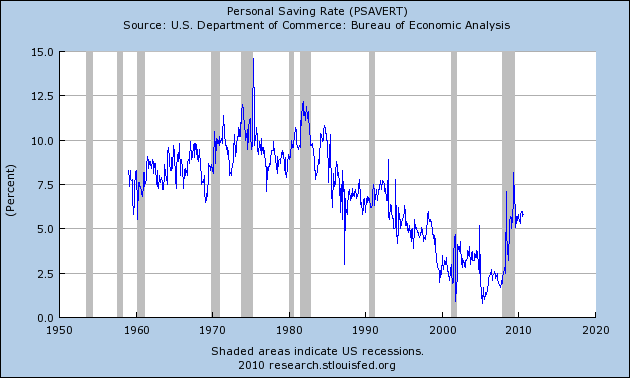
Some top Federal Reserve officials have come up with a really bizarre proposal for stimulating the U.S. economy.  As unbelievable as it sounds, what they actually propose to do is to purposely raise the rate of inflation so that Americans will stop saving so much money and will start spending wildly again.  The idea behind it is that if inflation rises a couple of percentage points, but consumers are only earning half a percent (or less) on their savings accounts, then there will be an incentive for consumers to spend that money as the value of it deteriorates sitting in the bank.  Yes, that is how bizarre things have gotten.  It is not as if U.S. consumers are even saving that much money.  Several decades ago, Americans typically saved between 8 and 12 percent of their incomes, but over this past decade the personal saving rate got down near zero a number of times as Americans were living far beyond their means.  Once the recession hit, Americans very wisely started saving more money, and so now the personal saving rate has been hovering around the 5 to 7 percent range.  This is well below historical levels, but the folks at the Fed apparently are eager for Americans to pull that money out and start spending it again.
In an article entitled "Fed Officials Mull Inflation as a Fix", Wall Street Journal columnist Sudeep Reddy described this bizarre new economic approach that some over at the Federal Reserve are now advocating....   
"But as the U.S. economy struggles and flirts with the prospect of deflation, some central bank officials are publicly broaching a controversial idea: lifting inflation above the Fed's informal target."
Does increasing inflation as a way to stimulate the economy sound like a good idea to any of you?
These are supposed to be some of the brightest economic minds that our nation has produced.
Unfortunately, it is becoming increasingly apparent that the folks running the Federal Reserve do not have a clue about sound economic policy.
Anyone who lived through the "stagflation" days of the 1970s should know that inflation does not spur economic growth.
But now some of the most prominent Fed officials are publicly proposing that we should purposely generate more inflation so that "real interest rates" (interest rates with inflation factored in) will go down.
For example, during a recent interview the president of the Federal Reserve Bank of Chicago, Charles Evans, made the following statement....
"It seems to me if we could somehow get lower real interest rates so that the amount of excess savings that is taking place relative to investment needs is lowered, that would be one channel for stimulating the economy."
If you truly grasp what Evans is proposing here, your jaw should be dropping.
He is basically coming right out and saying, "Hey, let's go out and crank up the inflation rate so that American consumers will start recklessly spending their money again."
So are Americans really saving too much money?
Of course not.
Just take a look at the chart below.
Americans are actually still saving far, far less than they used to.  As you can see from the chart, in the 1960s and 1970s Americans would usually save somewhere between 8 to 12 percent of their incomes.
Today, we are still well below that level.  But we have made some progress from the reckless days of five to ten years ago when Americans were living far, far, far beyond their means and basically saving next to nothing....
So now some top Fed officials want to undo all that.  They apparently want Americans to grab their credit cards and to run out to the stores and spend wildly like they did a few years ago.
But spending recklessly is not going to repair our economy.  In order to have a healthy, balanced economy you need to have a healthy personal saving rate.  Encouraging Americans to spend every last nickel they have may boost economic figures in the short-term, but it will make our long-term problems even worse.
But it is not just Federal Reserve officials that are advocating this kind of nonsense.  Just a few months ago, IMF chief economist Olivier Blanchard suggested that it might be a good thing if western nations doubled their inflation targets from two percent to four percent. 
It seems like almost everyone is in an inflationary mood these days.
The Federal Reserve keep dropping hints that it is ready to print lots more money and unleash another huge round of quantitative easing.
Just this past week, the Bank of Japan shocked world financial markets by cutting interest rates even closer to zero and by setting up a 5 trillion yen quantitative easing fund.
In fact, nations all over the world have become increasingly eager to devalue their national currencies in an attempt to gain an edge in international trade.
So after years of relatively low inflation, it looks like our leaders are almost eager to tangle with the inflation tiger once again.
But it might not be so easy to tame the next time.
Once a really bad inflation spiral gets going it is really hard to stop.
But in the end, it is not going to be Barack Obama or the U.S. Congress that is going to decide if we pursue these inflationary policies or not. 
Ultimately, these decisions are in the hands of the unelected, unaccountable Federal Reserve.
If you don't like it, too bad.  When was the last time a U.S. president or the U.S. Congress really stood up to the Federal Reserve?  It just doesn't seem to happen.
The Federal Reserve is going to do what the Federal Reserve wants to do, and the rest of us are going to have to live with it.
Of course we could all try to elect candidates who would demand more accountability from the Federal Reserve this fall, but unfortunately those kind of candidates are few and far between.
The sad reality is that at this point, the Federal Reserve is pretty much completely and totally out of control.  The U.S. dollar has already lost over 95 percent of its value since 1913, and now the Federal Reserve is giving every indication that inflation is going to get even worse in the years to come.
But flooding the system with more paper money is not going to solve anything.  Instead, it is just going to make it even harder for average American families to buy milk and bread and to put gas in the car.
Inflation is a hidden tax on every single dollar that we already own.  It is a destroyer of wealth and a wrecker of currencies. 
But now some of the top officials at the Fed see inflation as a key tool in creating "economic growth". 
With such a clueless collection of idiots running our economy (and the Federal Reserve does run our economy) do any of you actually believe that there is hope for the U.S. economic system in the long run?

Read more - 
http://blacklistednews.com/Federal-Reserve-Officials%3A-Americans-Are-Saving-Too-Much-Money-So-We-Need-To-Purposely-Generate-More-Inflation-To-Get-Them-Spending-Again/10966/0/13/13/Y/M.html